
Luminous efficiency measurement
The measurement of luminous efficacy is one of the key parameters that must be taken into account when designing and assessing lighting quality. Luminous efficacy is defined as the ratio of the total light output radiated by a source to the total electrical power consumed by the light source. It is a very important measure of the energy efficiency of lighting, as it determines how much energy is actually used to produce light.
Specialised equipment is needed to measure luminous efficacy. The most important of these are a spectrometer, a photometer, an integrating sphere, a goniometer and a goniometric darkroom. The spectrometer measures the spectral distribution of light, i.e. its colour components, the photometer measures light intensity and the integrating measuring sphere is used to accurately measure total luminous flux.
The measurement of luminous efficacy follows the standards set by the International Organisation for Standardisation (ISO) and the European Committee for Standardisation (CEN). The most important standards for luminous efficacy measurements are: PN-EN 13032-1, PN-EN 13032-4, and PN-EN 13032-2.
When measuring luminous efficacy, there are several important points to bear in mind. First of all, the light source to be measured must be thoroughly cleaned and prepared before the measurement. Next, the measuring equipment must be calibrated and the relevant measurement parameters must be set.
In summary, the luminous efficacy result is essential for anyone designing or assessing lighting quality. With this measurement, it is possible to determine exactly how much electricity is needed to produce a certain amount of light. The use of appropriate standards and specialised equipment allows for accurate and reliable measurement results.
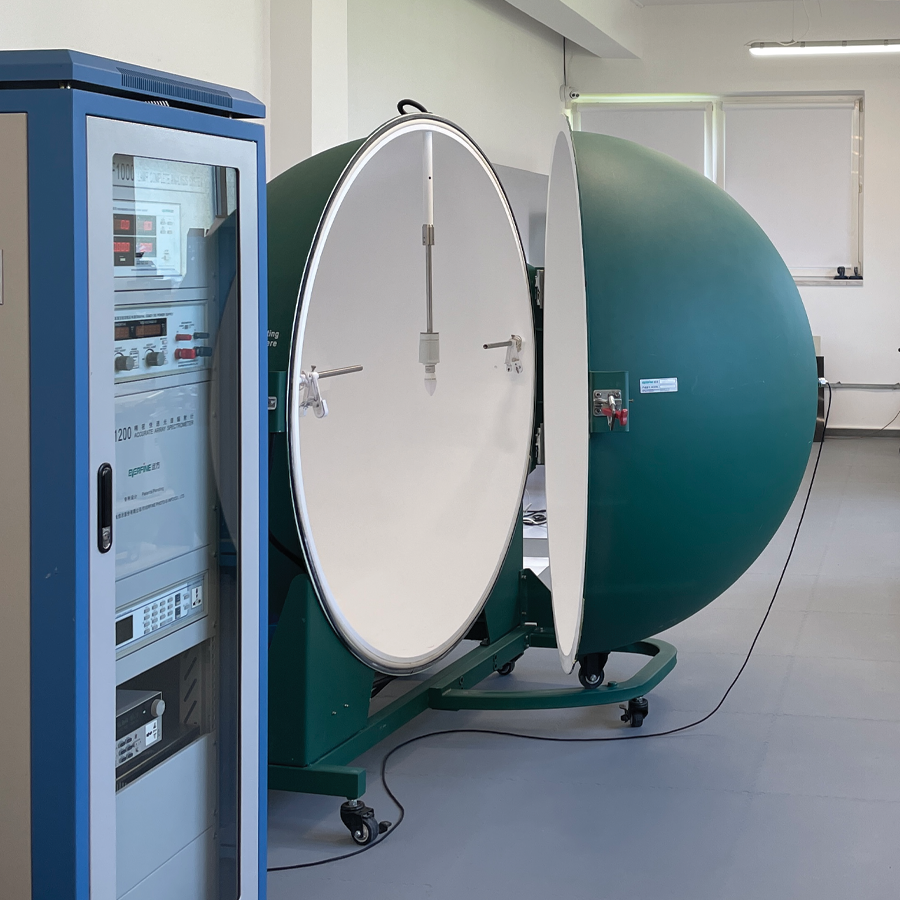
What does the implementation of the measurement look like?
1. The first step is to contact us to find out more about our services and to arrange a measurement.
2. The next step is to have the measurements carried out by our experienced professionals, who have the knowledge and skills needed to measure accurately and precisely.
3. Once the measurements have been completed, we analyse the results, which are carefully collated and reported. If required, we can provide the results in electronic or printed form.
4. Finally, we complete the job by providing full technical support to the client. In addition, we can offer advice on the interpretation of the measurement results and their application in practice.